Restoring the whole Forth River catchment
Integrated catchment restoration from the Scottish Highlands to the Firth of Forth

Integrated catchment restoration from the Scottish Highlands to the Firth of Forth
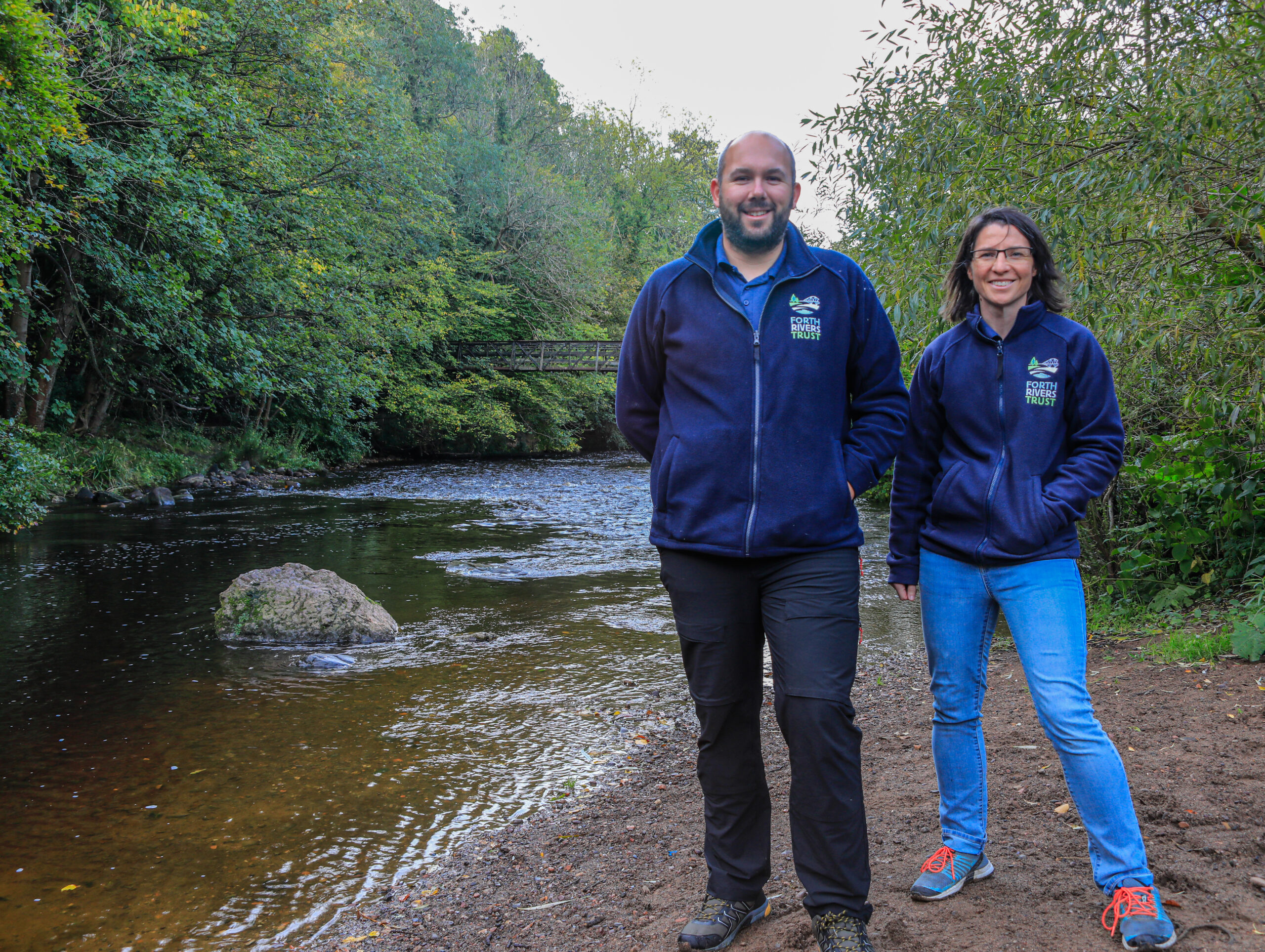


The Forth Catchment stretches from the upland Trossachs and Scottish Highlands through lowland plains around Stirling to the Firth of Forth estuary, encompassing 14 main river catchments. Home to around 1.3 million people, its economy spans urban manufacturing and services alongside agriculture, forestry, and hydroelectric generation.
The catchment includes nationally significant ecosystems — the River Teith is a Special Area of Conservation, parts of the catchment sit within Loch Lomond and The Trossachs National Park, and the rivers support iconic migratory species including Atlantic salmon, sea trout, lamprey, and eels.
Yet decades of land-use pressure have taken their toll. Water quality is under stress from urbanisation, agriculture, and historical industry. Habitats are fragmented, with barriers blocking migratory fish. Peatland and wetland ecosystems are degraded. Invasive non-native species — including Giant Hogweed, Japanese Knotweed, Himalayan Balsam, American Skunk Cabbage, and Signal Crayfish — are threatening native habitats across the catchment. And climate change is altering river flows, intensifying flood risk, and increasing ecosystem stress.

The Forth Rivers Trust (FRT) has evolved from a fish-focused conservation organisation into a leader in integrated catchment management, guided by a Vision and Strategy for 2045. FRT had already adopted the 4 Returns Framework within its Leven LENs project before the partnership with Commonland began — but this highlighted key gaps, particularly the need to better integrate social and inspirational dimensions into restoration, and to foster stronger collaboration among organisations working across the catchment.
Commonland partners with FRT to embed a more connected and systemic approach — ensuring environmental, social, and economic benefits are realised together.
Leven Landscape Enterprise Network (Leven LENs): An innovative approach recognised by NatureScot and the National Lottery Heritage Fund, coordinating funding, land management, and stakeholder collaboration to deliver landscape-scale restoration. The model recognises that government funding alone cannot meet the scale of the biodiversity crisis and explores new investment models that are good for nature, communities, and the economy.
Teith Restoration Initiative: A multi-million pound landscape-scale restoration project in the upper Teith catchment within the National Park, bringing together peatland restoration, nature-based river restoration, large-scale tree planting, riparian buffers, and grazing management across 2,000 hectares. Secured over £330,000 from NatureScot’s Biodiversity Challenge Fund, with further development funding.
Forth Resilient Water Landscapes: A collaborative, action-led project with the Carse of Stirling Partnership and Glasgow Caledonian University, focused on restoring water resilience across the Upper Forth — balancing ecological health, rural livelihoods, and community well-being.
Invasive species control: £265,000 in Nature Restoration Fund support for mapping and controlling priority invasive species across the catchment’s 14 river systems, paving the way for long-term community-led control programmes.
Catchment partnership building: Forming new partnerships including the Lothian Esk Catchment Partnership with East Lothian and Midlothian Councils, and deploying innovative digital tools (ArcGIS StoryMaps, field data capture) to replace static management plans with living, interactive catchment intelligence.
Community engagement: Volunteer programmes, education, and public awareness initiatives connecting people with rivers — with employment creation built into restoration project design.
Scottish HLR Learning Network: Co-developing with Commonland a national learning network connecting landscape-scale initiatives across Scotland for peer exchange and collective action.What are we doing in the Forth River Catchment?


FRT’s Vision and Strategy for 2045 sets out a long-term ambition for a Forth Catchment where ecological restoration, community well-being, and economic resilience are pursued together — where healthy, vibrant, and resilient ecosystems support thriving communities and iconic species, and the many organisations working within the catchment are connected, learning from each other, and collectively building a more resilient landscape.
As FRT’s co-directors put it: creating an environment in which native species can thrive has never been so important — but doing so requires new approaches that bring together nature, economy, and society.


The Forth Rivers Trust is pleased to announce £265,000 of funding awarded by the Scottish Government’s Nature Restoration Fund, managed by NatureScot. This funding will support 3 projects which will improve biodiversity, bring together efforts to tackle Invasive Non-Native Species, and build climate resilience within the Forth catchment: the Kelty Water development project, Revive the Allan Water and its Tributaries, and the Forth Invasive Species Project.


Atlantic Isles

West England
Uniting farmer clusters for landscape-scale regeneration in the West of England

Landscape context and pressures The River Medway is one of the most polluted rivers in the UK. Running from the High Weald headwaters through water meadows to the Thames Estuary, the catchment suffers from agricultural and urban runoff, soil degradation, sewage pollution, habitat loss, and biodiversity decline — all amplified by increasing droughts and floods. […]

Community-led food systems and catchment restoration across the Tay Bioregion

Addressing an ecological crisis through farmer-led regenerative practices at the largest freshwater lake in the Atlantic Isles, Lough Neagh
Ireland

County Waterford
Collective action for healthy ecosystems and thriving communities in South-East Ireland