Restoring the Medway River together
Hectares
High Weald headwaters to Thames Estuary
Active since
2025 (sensing), 2026 (funded partnership)



The River Medway is one of the most polluted rivers in the UK. Running from the High Weald headwaters through water meadows to the Thames Estuary, the catchment suffers from agricultural and urban runoff, soil degradation, sewage pollution, habitat loss, and biodiversity decline — all amplified by increasing droughts and floods. Farmers and landowners across the catchment are increasingly concerned, many naming water management as one of their key issues.
Multiple stakeholders are working to address these challenges, but efforts are fragmented and hampered by systemic barriers. Data on land use and river health is scattered and sometimes outdated, leaving actors without the evidence base they need. Research on the Upper River Medway shows that people across the catchment express strong commitment to seeing the river recover — but feel stuck.


The Medway Catchment Learning and Action Network is creating the relational infrastructure to connect fragmented efforts across the entire catchment. A partnership between Commonland, the South East Rivers Trust, and Friends of the River Medway, the network operates through two mutually reinforcing streams: a digital platform for sharing critical data, maps, and best practices, and an in-person engagement stream that builds trust and collaborative capacity.
Action research and stakeholder engagement: A comprehensive scoping phase engaging 45+ individuals across four stakeholder groups — farmers and landowners, conservation groups, statutory bodies, and community organisations — to understand needs and test engagement approaches.
Digital platform and data hub: Developing a shared platform with maps showing restoration potential and activities, a directory of who is doing what, resource and event sharing, and case studies with proven outcomes.
Farmer cluster engagement: Connecting farmer clusters and facilitators for peer learning, skill-building workshops, and exchange with other landscape-scale initiatives including the West of England Farm Supercluster.
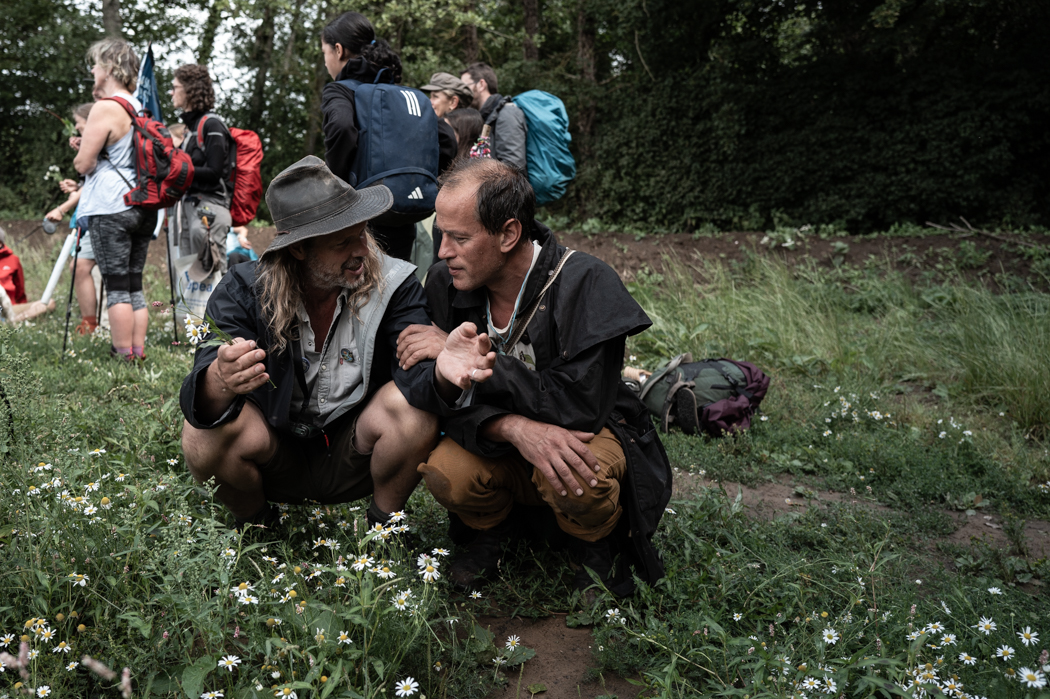
River Medway Pilgrimage: An annual source-to-sea community journey combining litter picks, citizen science, art, storytelling, and ceremony — led by Friends of the River Medway. The Pilgrimage has led to two councils acknowledging the Rights of the River Medway.
Cross-stakeholder workshops: Bringing diverse actors together to create shared understanding and build collaborative capacity at catchment scale.

Each initiative is doing genuinely interesting work. Each carries a real commitment. And each is, in significant measure, building its own thing. What is largely absent is the relational infrastructure that would turn this into an ecosystem — a forest, rather than trees in separate pots.
Jenny Andersson, observing patterns in neighbouring landscapes

A Medway catchment where key stakeholders feel more connected, data and information flows freely between organisations and communities, and more varied and impactful collaborations lead to improved strategic decision-making and the distribution of funding for regeneration. A network that has significantly contributed to achieving greater collective impact — restoring the health of the River Medway, its ecosystems, and the communities they sustain.
Long regarded as a path to spiritual renewal, Friends of the River Medway reimagine pilgrimage as both a journey of inner transformation and outward change – harnessing its transformative power to inspire healing for the very landscapes we wander through.


Project Lead. Strategic design and partnership facilitator, former Ellen MacArthur Foundation.

Senior Catchment Officer, SERT. Hosts the Medway Catchment Partnership.

Co-founder, Friends of the River Medway. Pioneer of the River Medway Pilgrimage and Rights of the River Medway advocacy.

Assistant Professor, University of Sussex. Nature connection research and participatory methods.
The river is not just a backdrop. She is the living thread that weaves our lives together.
Zofia Page, Friends of the River Medway
