Restoring the Tay Bioregion
Community-led food systems and catchment restoration across the Tay Bioregion

Community-led food systems and catchment restoration across the Tay Bioregion
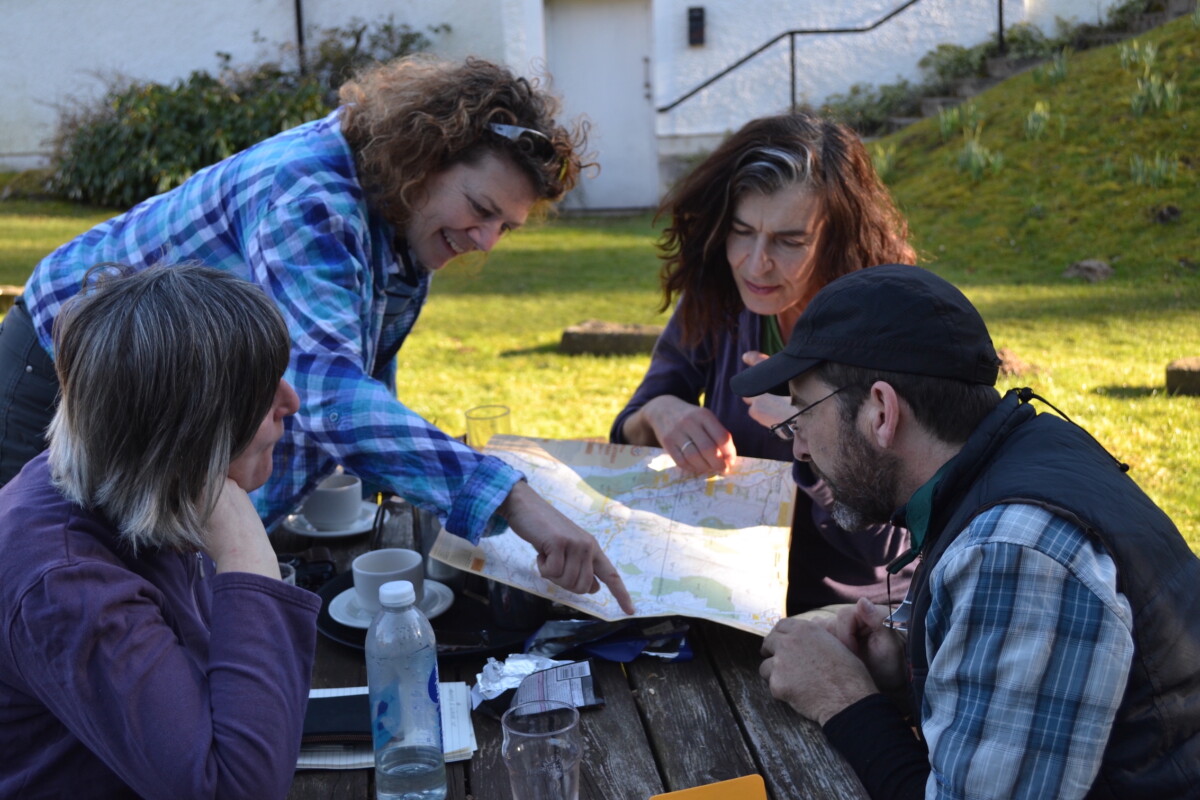


Mapping and supporting community-led food growing initiatives across Tayside, including community gardens, orchards, and allotments

Piloting participatory planning tools to build community food systems from the ground up

Catalysing a catchment restoration initiative with partners for woodland, peatland, water, and salmon recovery

Collecting and publishing baseline data on landscape, habitats, and human communities to inform collective action
The Tayside Bioregion stretches from the mountain glens and uplands of the west through rolling hills and fertile lowland plains around Strathmore to the Tay estuary. Home to around 416,000 people, its economy encompasses intensive arable and pastoral agriculture on the lowlands, urban services and manufacturing in Dundee and Perth, hydroelectric generation, research and innovation, and tourism.
Climate change is bringing extreme weather, altered river flows, and ecosystem stress. Biodiversity is declining — species are disappearing, rivers, wetlands, and uplands are degraded. Historical and current land and water management practices are harming soils, habitats, and water quality. And an economic model that drives environmental degradation is also reducing community resilience.

Bioregioning Tayside is a community-led initiative focused on growing local food resilience, restoring river catchments, and building connection between people and place. Commonland is in an early partnership phase, exploring how the 4 Returns Framework can support and strengthen the bioregional approach.


A Tayside where community-led food systems, healthy river catchments, and thriving ecosystems are woven together — where people are reconnected to the land, local food resilience is strengthened, and the bioregion’s ecological and social health is restored for future generations.
Atlantic Isles

West England
Uniting farmer clusters for landscape-scale regeneration in the West of England

Landscape context and pressures The River Medway is one of the most polluted rivers in the UK. Running from the High Weald headwaters through water meadows to the Thames Estuary, the catchment suffers from agricultural and urban runoff, soil degradation, sewage pollution, habitat loss, and biodiversity decline — all amplified by increasing droughts and floods. […]

Addressing an ecological crisis through farmer-led regenerative practices at the largest freshwater lake in the Atlantic Isles, Lough Neagh

Integrated catchment restoration from the Scottish Highlands to the Firth of Forth
Ireland

County Waterford
Collective action for healthy ecosystems and thriving communities in South-East Ireland