Restoring the Avon Bioregion
Uniting farmer clusters for landscape-scale regeneration in the West of England

Uniting farmer clusters for landscape-scale regeneration in the West of England
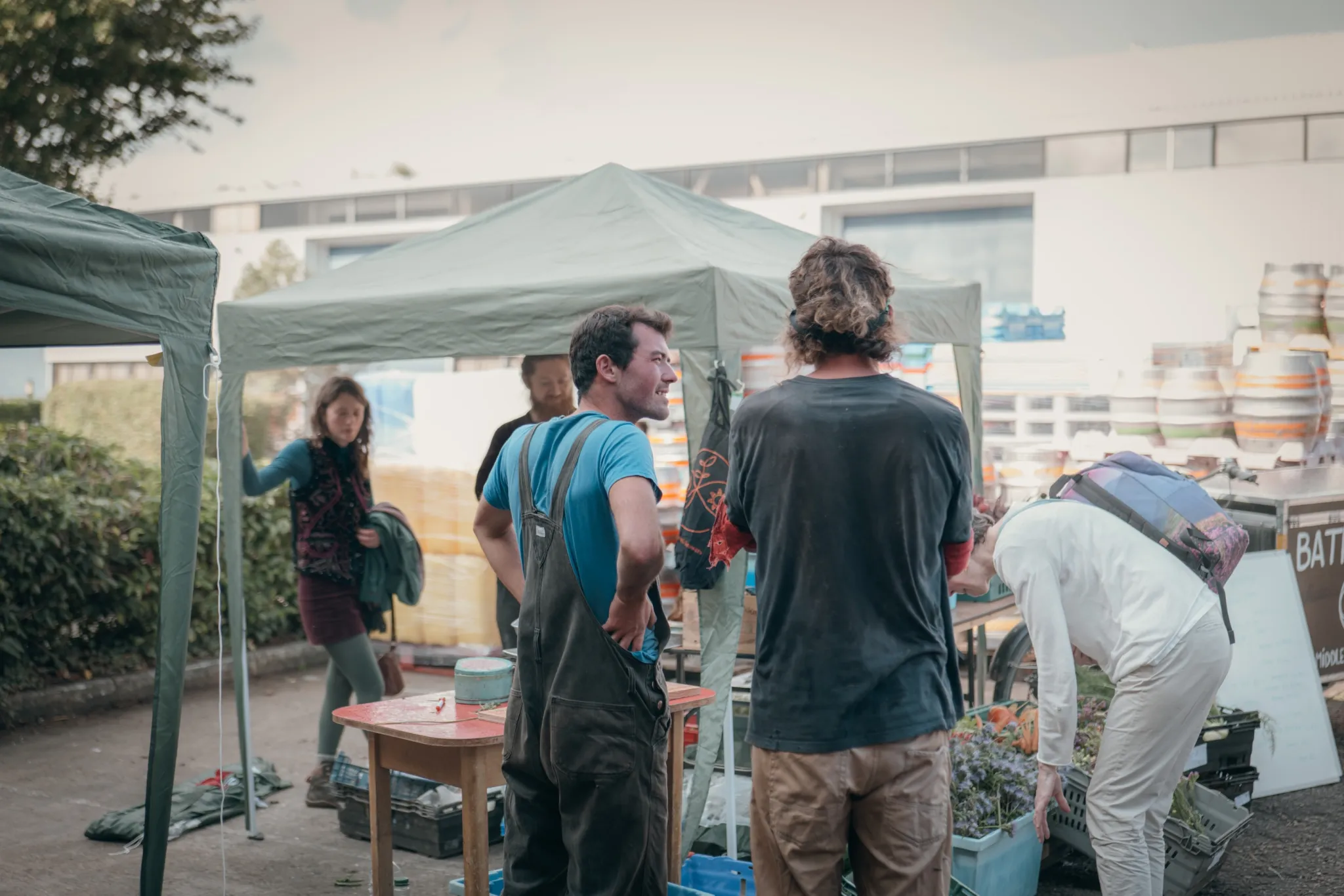


The Avon Bioregion in the West of England sits in a bowl-shaped valley with higher ground around the edges, strongly influenced by tidal and sea-level dynamics. Home to around 1.5 million people, its economy spans agriculture (arable, dairy, livestock), tourism, heritage, aerospace engineering, and a growing knowledge economy.
Water quality is degraded by nutrient runoff, sewage, soil erosion, and urban discharge. Rivers have been modified and fragmented, sea-level rise and flooding are placing estuarine habitats under stress, urbanisation is fragmenting habitats, and farmers face fragmented, inefficient routes to market — long supply chains with low local value capture — alongside infrastructure gaps in rural areas.
Yet across this landscape, ten active farmer clusters comprising 600 farmers and covering 65,100 hectares are already working with three backbone organisations – We Are Avon, BART, and FWAG-SW – to build something remarkable: what may become the UK’s first landscape-scale regenerative farm supercluster.

Commonland entered a needs assessment with We Are Avon in late 2025 to understand how best to support this emerging supercluster structure. The opportunity is significant: by helping farmer clusters coordinate at catchment scale, the partnership can demonstrate how aggregating existing landscape initiatives into broader approaches unlocks systemic impact.


Building the Farm Supercluster: Supporting the alignment and coordination of ten farmer clusters through needs and opportunities assessment, impact review, fundraising and finance mapping, communications strategy (including GIS mapping), and governance structure development.
Co-production and learning: Offline co-production workshops and online meetings bringing together backbone organisations and cluster leads to co-design the supercluster approach.
Exchange and learning infrastructure: Developing pathways for farm cluster-to-cluster learning exchange, with ambitions for a shared learning portal connecting to other landscape-scale initiatives across the Atlantic Isles.


A West of England where farmer clusters work together at catchment scale, sharing knowledge, coordinating action, and demonstrating that regenerative agriculture can thrive as a collective endeavour, delivering for nature, communities, and farm livelihoods.


Landscape context and pressures The River Medway is one of the most polluted rivers in the UK. Running from the High Weald headwaters through water meadows to the Thames Estuary, the catchment suffers from agricultural and urban runoff, soil degradation, sewage pollution, habitat loss, and biodiversity decline — all amplified by increasing droughts and floods. […]

Community-led food systems and catchment restoration across the Tay Bioregion

Addressing an ecological crisis through farmer-led regenerative practices at the largest freshwater lake in the Atlantic Isles, Lough Neagh

Integrated catchment restoration from the Scottish Highlands to the Firth of Forth
Ireland

County Waterford
Collective action for healthy ecosystems and thriving communities in South-East Ireland