
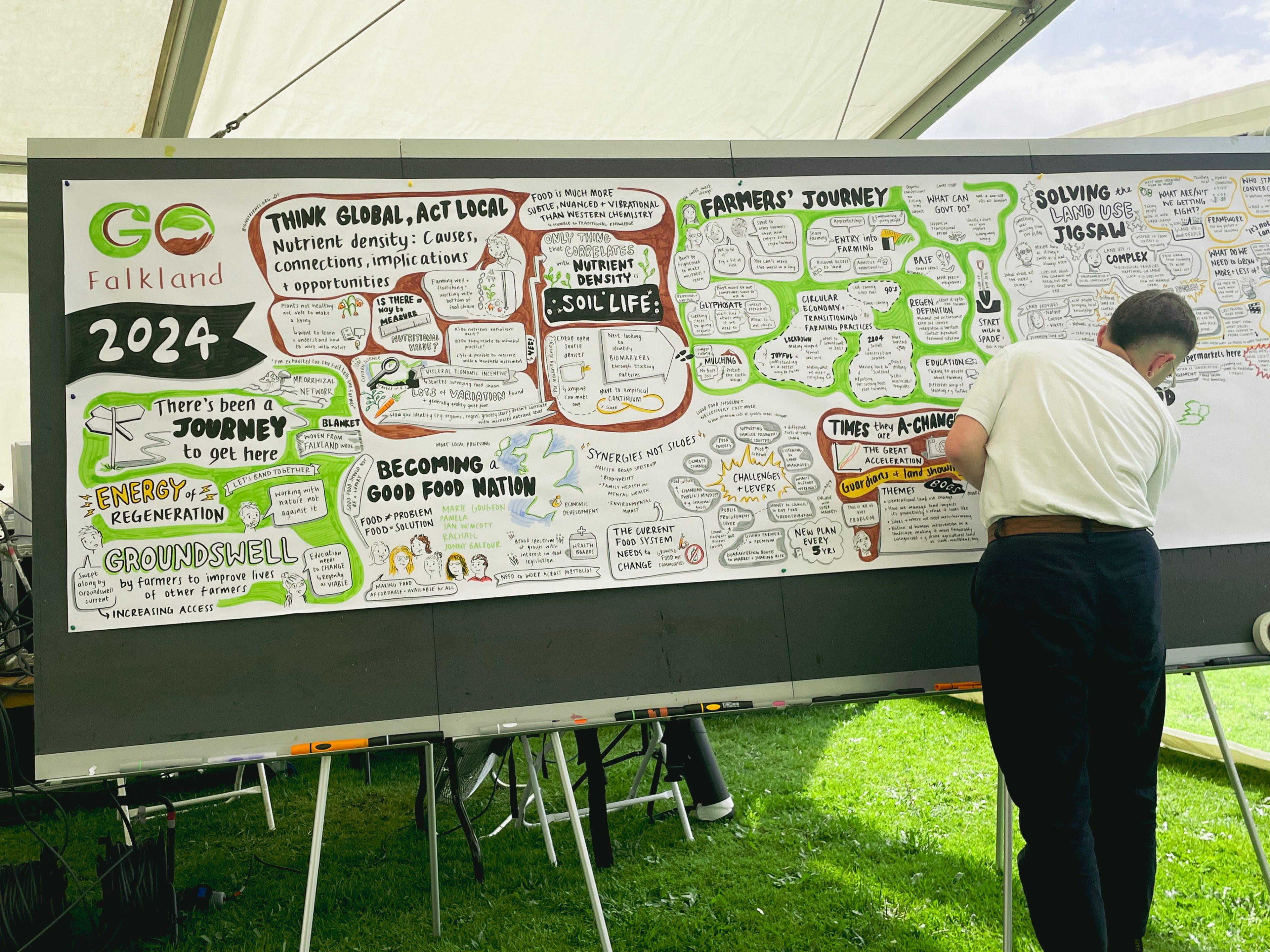


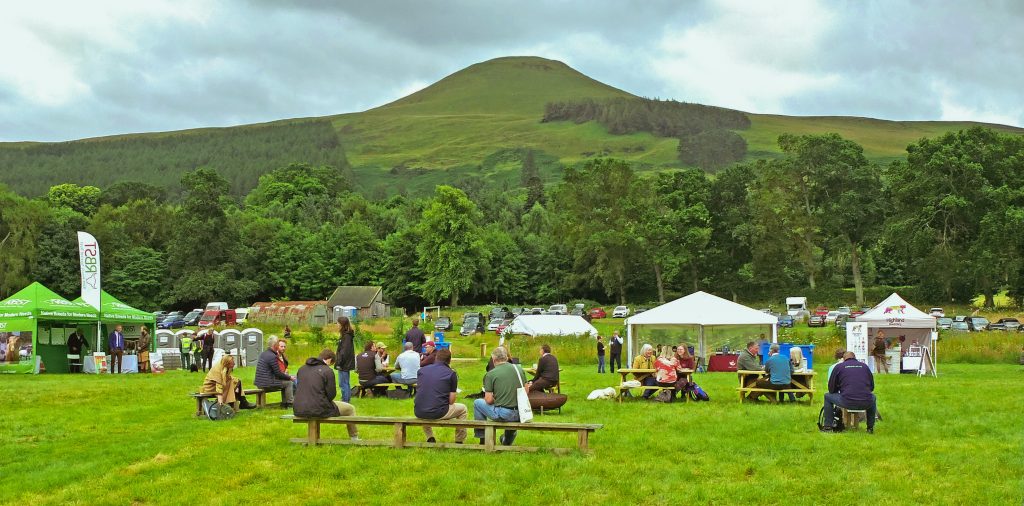
We had the privilege to attend this year’s second Go Falkland festival held at the Falkland Estate in Fife, Scotland. A new Scottish forum for “vital voices and hands-on practitioners in the fields of Regenerative Farming, Forestry and Food”, this gathering is a spin-off of Groundswell Festival and aims to bring farmers and other land stakeholders together to co-design “a healthier and fairer future for Scotland’s land use and food system”.
The event took place in a field amongst wobbly grass. The informal atmosphere encouraged open, honest discussions and creative solutions, reinforcing the importance of landscape health and resilience.
This setting was the backdrop for conversations on surging global food prices, climate change, soil degradation and lack of financing for environmental restoration. Let’s dive into our key take-aways from July’s fantastic event:
1. Integrated approaches are key to overcoming barriers to green financing
One of the festival’s focal points was green financing, particularly in relation to tree planting and carbon credits. As the discussions unfolded, the barriers to the successful implementation of projects within the voluntary carbon market were highlighted. The potential for carbon credits in soil and peatland restoration is vast, but the lack of standardised metrics and incentives hampers progress.
The need for an integrated approach to landscape restoration was also a recurring theme, with concerns raised about how existing codes, like the Peatland Restoration Code and Forest Code, can sometimes work against each other. The Woodland Trust, a key player in this arena, highlighted their efforts to support landowners in planting new woodlands through carbon credits certified by the Woodland Carbon Code.
2. To reverse degradation, we need to foster healthier soils through diverse practices
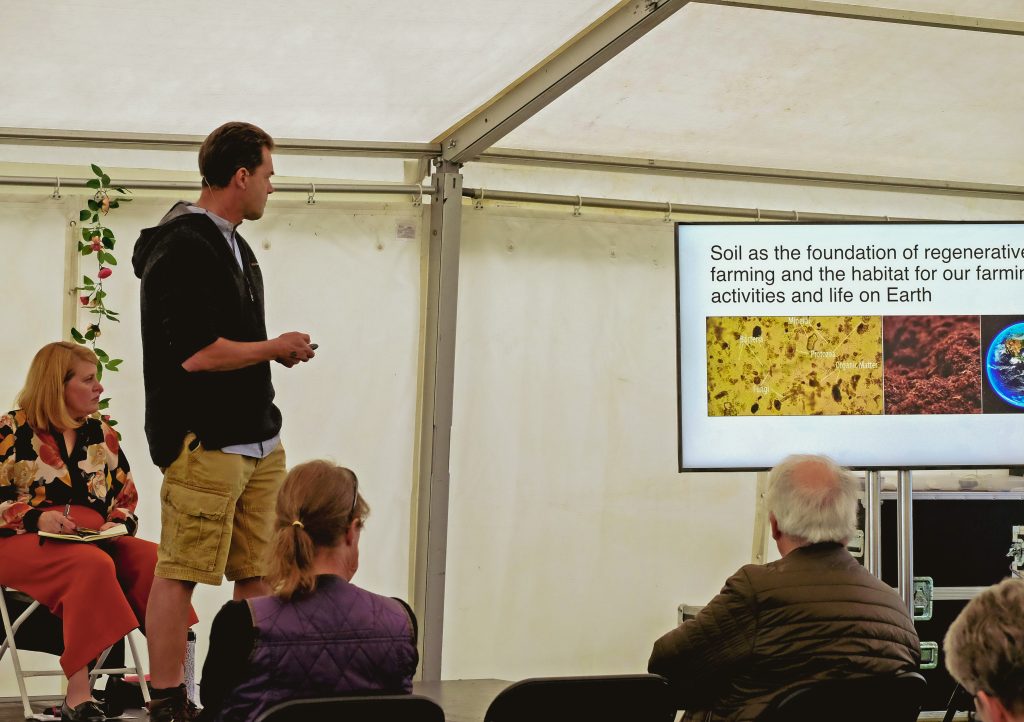
Joel Williams, a noted expert for his work on soil education, sounded the alarm on the decline of soil structure across the UK and beyond. He highlighted that issues such as soil compaction, contamination, alkalinity, salinity, are eroding the foundation of our agricultural systems. Williams outlined key principles to reverse this trend: minimising soil disturbance, maximising crop diversity, keeping soil covered, maintaining living roots year-round, and integrating livestock into farming systems.
These principles are not just theoretical; they are actionable steps that can transform our relationship with the land. Regenerative agriculture, as Williams pointed out, is about growing soil from plants, rather than the conventional approach of growing plants from soil.
3. Achieving systemic change in land use requires political leadership and inclusive, community-driven local place plans
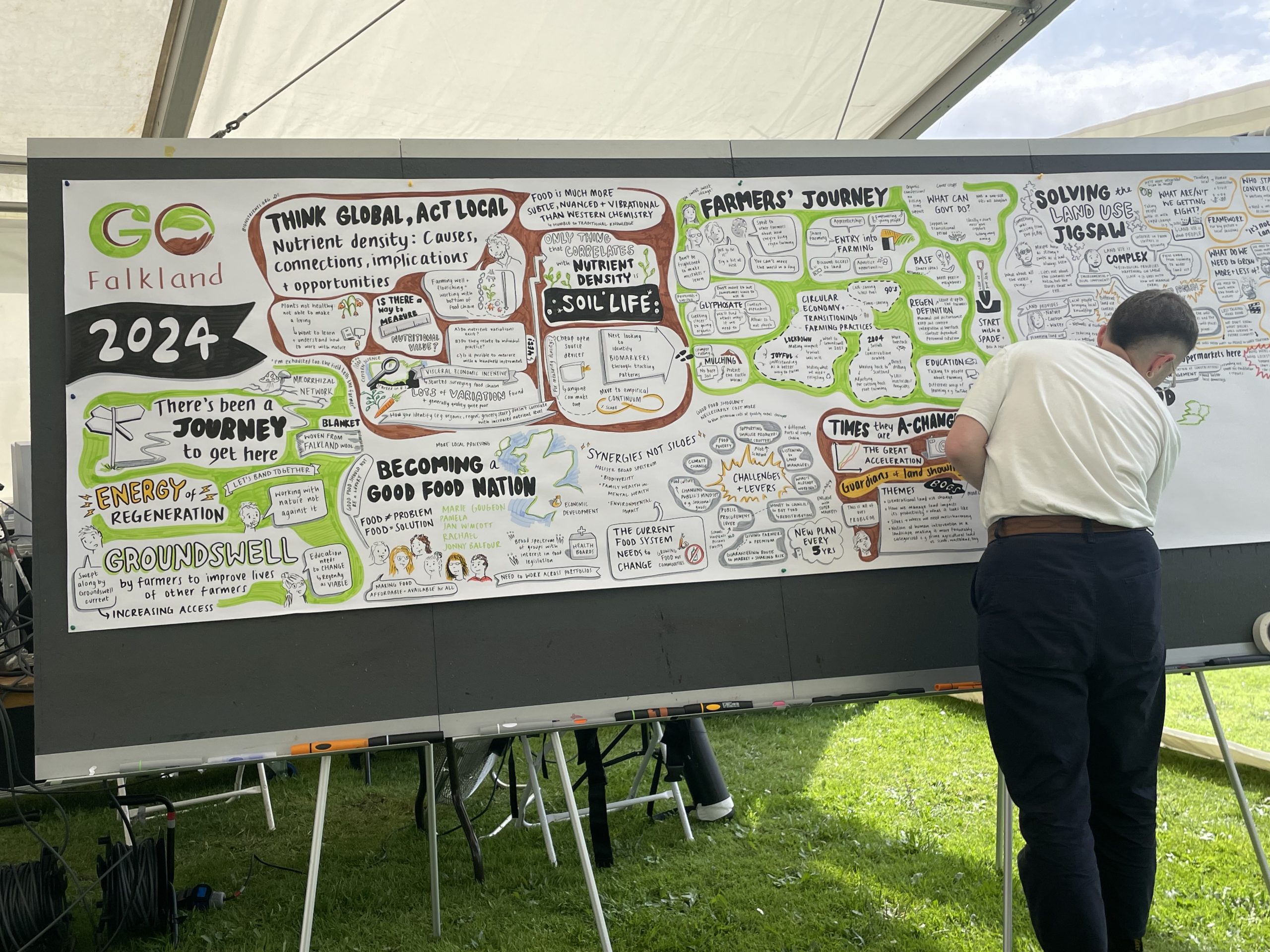
In a session titled “Solving the Land Use Jigsaw” the conversation turned to the broader challenges of systemic change. The current food system and associated subsidies, it was argued, are pushing land use in the wrong direction. This “wicked problem” requires not only political leadership but also a willingness to accept that there will be winners and losers in the transition to more sustainable practices.
One proposed solution was the development of local plans for land use, with strong community facilitation to ensure that all stakeholders are involved. The importance of inclusivity in these discussions cannot be overstated, as often key players are left out of the decision-making process. Case studies from the Scottish Land Commission and experiences from the Scotland Development Trust provided valuable insights into how these plans can be effectively implemented.
4. We need food system policy grounded in science to safeguard public health
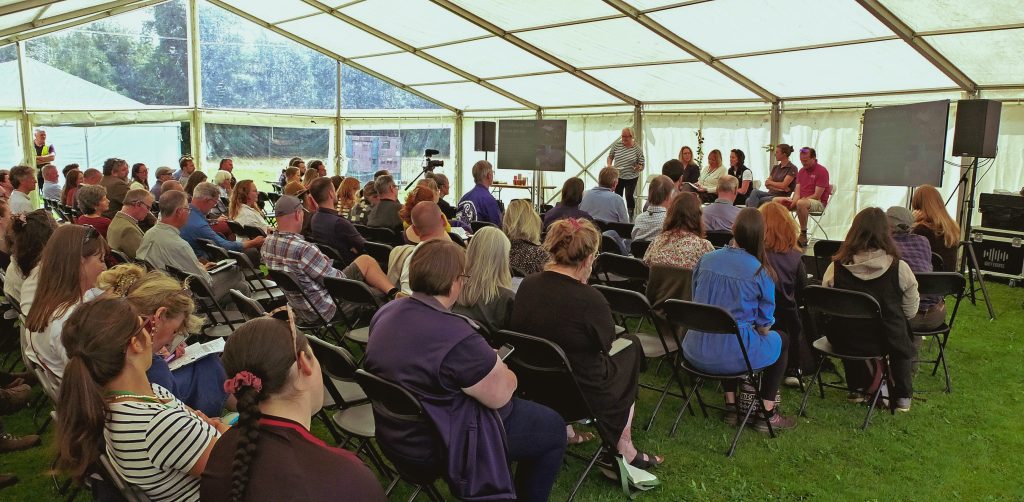
The session on “Good Food Regions” showcased the work of Propagate a sustainable food partnership in Scotland that has developed a robust community food network despite the lack of food-growing strategies in many local authorities. Their efforts were recognised with the Nature Scotland Food and Farming Award, and their story was brought to life in the film “Growing a Local Food Ecosystem.”
However, the festival also underscored the urgent need for policy and science to work together to address the deep flaws in our current food system. The link between how we grow food and public health was a key theme, with speakers emphasising that the system is failing not only farmers and nature but also consumers. Effective policy must be grounded in scientific evidence, notably research showing how food can help reduce non-communicable diseases. A key insight is also that pioneers of regional food systems are often taking substantial personal and financial risks. They highlight that increased support and exchange would be able to leverage these pilots towards more systemic impact.
5. We must focus on educating the youth: the future of our food systems
Education emerged as a critical component in the fight for a more sustainable food system. Incorporating agriculture and food into school curricula is essential for reconnecting young people with the origins of their food and fostering a lifelong interest in learning about sustainable practices. The importance of sharing both mistakes and successes was also highlighted as a way to build collective knowledge and resilience.
Dough: A metaphor for a growing movement
The festival concluded with a storytelling performance titled Arise – the Bread Revolution. This captivating piece explored the history of wheat and bread-making, and the potential for communities to reclaim these ancient traditions. As we watched the dough rise on screen, we were reminded of the power of storytelling to raise awareness and inspire the action that is needed to make large-scale landscape restoration happen!
